
Do You Actually Need to Know Anything About Wine to Have Good Taste?
“I don’t really know much about wine…”
We hear this surprisingly often. Usually it’s said almost apologetically, immediately before someone tells us exactly what they like.
“I don’t know anything about wine, but I like reds that aren’t too heavy.”
“I know nothing about wine, but I love a really crisp white.”
“I couldn’t tell you why, but I just don’t like oaky Chardonnay.”
Here’s the interesting bit: you probably know more about wine than you think.
And more importantly, you don’t need to know a thing about malolactic fermentation, French oak or soil composition to know whether something tastes good to you.
Knowing wine and enjoying wine are different things
Wine knowledge can absolutely make drinking wine more interesting. Understanding why a cool-climate Pinot Noir tastes different from a warm-climate Shiraz, what oak does to Chardonnay or why two consecutive vintages from the same vineyard can taste different adds another layer to the experience.
But knowledge doesn’t give someone a superior palate.
A wine expert may be better at identifying and describing what they’re tasting. They may understand why a wine tastes the way it does and be better equipped to assess how well it has been made.
That doesn’t mean they’re better at deciding what you should enjoy.
Your palate belongs to you.
So what exactly is “good taste”?
This is where things get a little more complicated, because there is a difference between judging the quality of a wine and deciding whether you personally like it.
There are characteristics wine professionals can assess with some objectivity. Is the wine balanced? Does it have appropriate acidity? Are the tannins well integrated? Is the fruit overwhelmed by alcohol or oak? Does it have complexity and length? Are there any obvious faults?
Those things can help an experienced taster assess how well a wine has been made.
But quality and preference aren’t the same thing.
You can recognise that a powerful, highly regarded Cabernet is beautifully made and still not particularly want to drink it. Likewise, the wine you keep going back to might be relatively simple, fresh and easy drinking.
You’re not “wrong” because you prefer one to the other.
In fact, being able to say “I can see why that’s considered a very good wine, but it’s not really my style” is arguably a sign that you understand your own palate rather well.
Price doesn’t decide what you should like either
This is perhaps where people lose confidence.
Put a $25 bottle and a $150 bottle on the table and there’s an unspoken expectation that you’re supposed to prefer the expensive one.
But that’s not how taste works.
Price can reflect fruit quality, vineyard location, scarcity, lower yields, expensive oak, labour-intensive production methods, longer ageing and the reputation of a producer or region. So price can certainly tell you something about what went into producing a wine, and there are legitimate reasons why some wines cost considerably more than others.
What price can’t tell you is how much you’re going to enjoy drinking it.
A $150 bottle may be more complex, age-worthy or technically impressive than a $25 bottle. But if you genuinely prefer drinking the $25 wine, that’s the one you prefer.
And you’ve just saved yourself $125.
Forget the fancy vocabulary
One of the things that can make wine unnecessarily intimidating is the language surrounding it.
Someone takes a sniff and announces they can smell blackberries, violets, graphite, cedar and the forest floor after autumn rain. Meanwhile, you’re thinking, It smells like red wine.
That’s OK.
You might taste blackberry while someone else gets plum. One person finds pepper, another notices herbs. Neither necessarily has the better palate.
Our brains connect aromas and flavours with memories and experiences, so we don’t all interpret wine in exactly the same way. Professional tasting vocabulary is useful because it gives people a common language for discussing wine, but it isn’t a test you need to pass before you’re allowed to have an opinion.
You also don’t have to identify twelve different flavours before you’re officially allowed to enjoy your glass.
Sometimes “that’s delicious” is a perfectly adequate tasting note.
Knowing what you don’t like is useful too
Developing your palate isn’t just about discovering more wines you love. Knowing what you don’t enjoy can be equally helpful.
Perhaps heavily oaked Chardonnay isn’t your thing. Maybe you find big, tannic reds hard work. Perhaps you prefer wines with plenty of acidity, or you’ve realised you tend to enjoy savoury reds more than really ripe, fruit-driven styles.
That’s useful information.
The more you notice those patterns, the easier it becomes to choose wine in a restaurant, talk to someone in a bottle shop or try an unfamiliar variety without simply taking a wild guess.
You don’t necessarily need to know the technical reason you like something. Being able to describe the style you enjoy is often enough.
The best thing you can bring to wine is curiosity
Rather than worrying about how much you know, start paying attention to what you enjoy.
Was that wine lighter or fuller than you normally drink? Fresh and zippy or rich and creamy? Fruity or savoury? Did you like it more with food? Was there something about it you didn’t enjoy? Would you happily order another glass?
Every time you consciously notice one of those things, you’re learning a little more about your own palate.
And the more wines you try, the more reference points you build. You might discover that you enjoy Chardonnay after years of thinking you didn’t – just not the heavily oaked style you’d previously encountered. Or that the Shiraz you thought was too big and powerful was just one expression of a variety that can also produce wonderfully elegant, savoury wines.
That kind of curiosity is far more useful than memorising a list of wine terms just so you can sound knowledgeable at dinner.
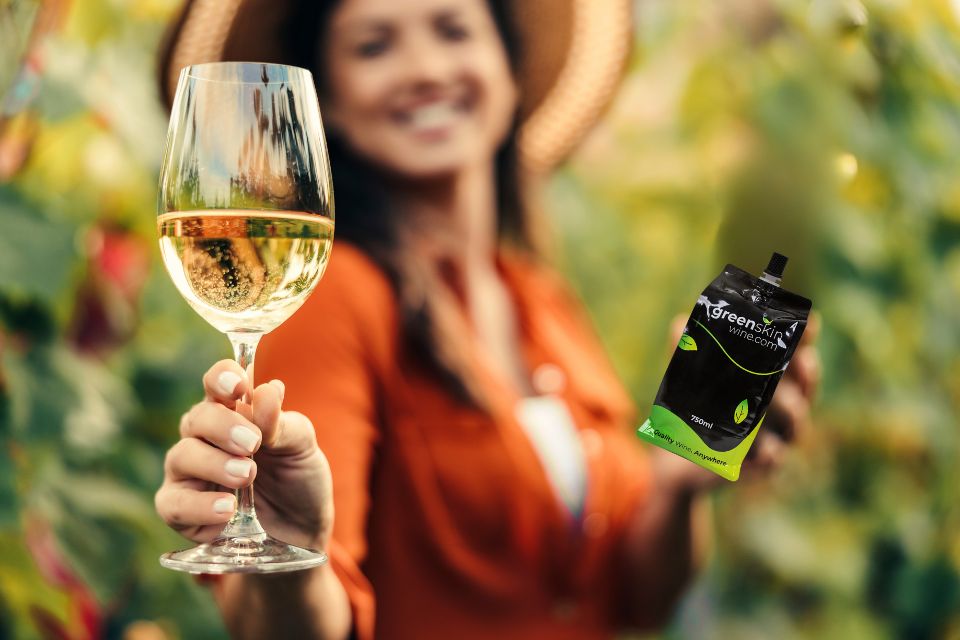
At Greenskin Wine, tasting and selecting wines is a pretty important part of what we do. There are plenty of discussions about balance, structure, varieties, regions, vintages and winemaking.
But eventually, every wine has to pass a much simpler test:
Do we actually want another glass?
Knowing more about wine can certainly make drinking it more fascinating. It can help you understand what’s in your glass, discover new styles and become more confident choosing what to drink.
But it doesn’t give you permission to have good taste.
You already get to decide what tastes good to you.

Cheers!
Mike and Kim
quality assurance guarantee
We stand firmly behind the quality of our wines and offer our money-back guarantee – your ticket to a risk-free wine adventure. See full details here Quality Assurance Guarantee.
Want to know more?